Lab-grown diamonds have revolutionized the jewellery industry, offering ethical, affordable, and visually identical alternatives to mined diamonds. Whether you’re considering a lab-grown diamond for an engagement ring or simply curious about this innovation, this guide covers everything you need to know.
What Is A Lab-Grown Diamond?
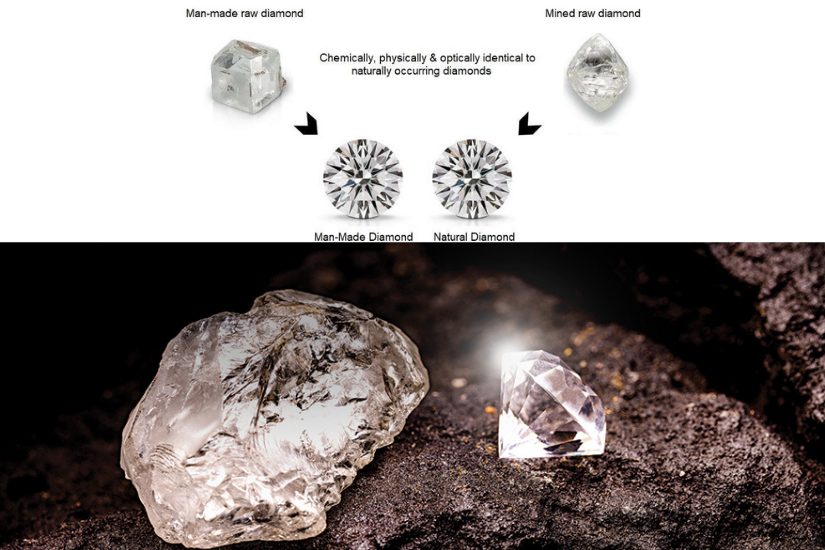
They’re diamonds that have been “grown” in a controlled laboratory setting. They’re comprised of the same physical, chemical, and optical properties as natural diamond; instead of being formed deep in the earth’s crust, they are created in a laboratory. Because lab-grown diamonds are chemically the same as natural earth-made diamonds, they are virtually indistinguishable in terms of appearance, quality and durability.
How Are Lab-Grown Diamonds Made?
It all starts with a seed diamond, which is typically a small lab-grown diamond. From there, the seed will either undergo Chemical Vapor Deposition (CVD) or High Pressure High Temperature (HPHT) processes to create the completed lab diamond.
1. Chemical Vapor Deposition (CVD)
- A diamond seed is placed in a vacuum chamber filled with carbon-rich gases.
- Microwaves heat the gases to create plasma, causing carbon atoms to break away and deposit onto the seed.
- Layer by layer, a diamond forms—mirroring nature’s own formation, but much faster.
2. High Pressure High Temperature (HPHT)
- A diamond seed and carbon source are placed in a high-pressure press.
- Conditions simulate those found deep in the Earth—intense heat and pressure encourage carbon atoms to bond with the seed.
- Over time, a larger diamond crystal grows.
Both methods produce diamonds in a matter of weeks and can create high-quality stones in various sizes and colours. Both CVD and HPHT diamonds can take several weeks or months to be created in a laboratory. The exact amount of time will depend on the diamond’s size, color and additional features. They can be produced in large batches in just a few weeks. This makes them considerably less expensive than natural diamonds of comparable size and quality.
What Is The Difference Between Lab-Grown And Simulated Diamonds?
| Feature | Lab-Grown Diamonds | Simulated Diamonds |
| Composition | Pure carbon (like natural) | Different substances (CZ, Moissanite) |
| Hardness (Mohs) | 10 | 8.5–9 |
| Appearance | Indistinguishable from mined diamonds | May sparkle differently |
| Durability | Excellent | Less resistant to wear |
| Value | Certified & resaleable | Typically no resale value |
Are Lab-Grown Diamonds Real?
Yes, they are as real as natural diamonds are. Their only difference is origin: lab-created diamonds are grown in laboratory settings, while natural diamonds form deep in the Earth. Chemically, physically, and optically, they are identical to natural diamonds, with the same hardness and brilliance. They also undergo the same grading process as natural diamonds: an assessment of the four C’s – cut, colour, clarity and carat weight.
Can You Tell the Difference Between Lab-Grown and Natural Diamonds?
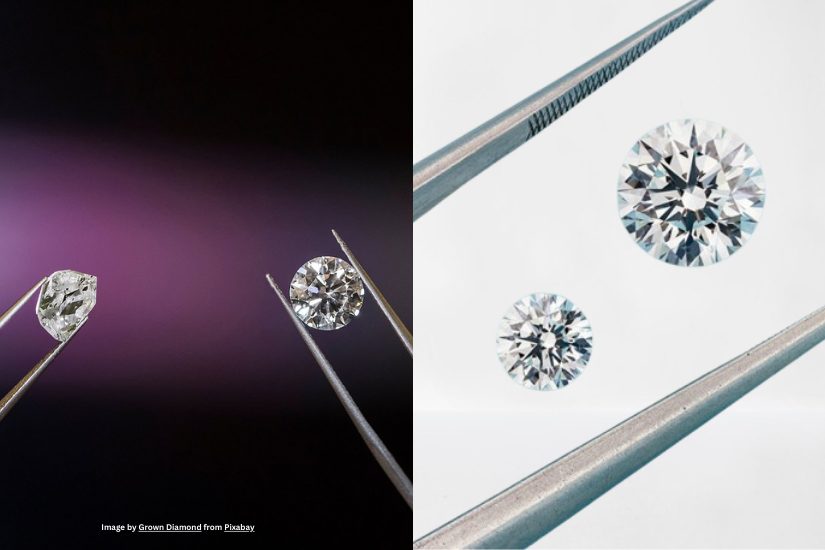
They shine and sparkle just like natural diamonds. To the naked eye, lab-grown and natural diamonds are indistinguishable. However, trained gemologists can detect minor differences in their growth structure and inclusions under high magnification. Specialised equipment can identify growth patterns unique to lab-created diamonds, such as certain fluorescence patterns and distinctive internal structures.
Do Lab-Grown Diamonds Pass the Diamond Test?
Yes. they exhibit the same thermal and electrical conductivity as natural diamonds, allowing them to pass standard diamond testers. However, advanced testing methods are necessary to differentiate them from natural diamonds or high-quality simulants.
Are Lab-Grown Diamonds Durable?
Yes. They rank 10 on the Mohs scale of hardness, the same as natural diamonds, making them extremely durable and suitable for everyday wear.
Do Lab-Grown Diamonds Turn Yellow?
They do not inherently turn yellow. However, exposure to certain environmental factors or impurities during the growth process can cause slight color changes. Regular cleaning can maintain their original appearance.
How Are Lab-Grown Diamonds Certified And Graded?
As with natural diamonds, diamonds made in a lab have the option to receive grading. After being sent to a gem institute that specialises in grading diamonds, they are graded independently by several of the lab’s gemologists. Afterwards, the individual grades are compiled and compared to give the diamond its final grade. Not all of them are graded. Typically, smaller gems do not get grading, and not all jewellers choose to grade their lab-grown diamonds.
Are They Priced Differently Than Natural Diamonds?
They have the benefit of being priced significantly lower than natural diamonds since their production capacity is unlimited.
Do They Hold Resale Value?
Yes, they do have a resale value. However, that value is generally lower compared to natural diamonds. They are often resold at a fraction of their original price, usually around 30-40% of what you initially paid. This is because the supply is not limited by nature; they can be produced in large quantities, which keeps the market flooded with supply. In contrast, natural diamonds are rare and finite, which helps them maintain their value over time.
Are Lab-Grown Diamonds a Good Investment?
If your goal is financial return, they may not be ideal. They are not scarce, and resale markets are still developing. However, they are an excellent choice for budget-conscious buyers seeking a beautiful, ethical, and high-quality diamond for jewellery, not as an investment asset.
Final Conclusion
Lab-grown diamonds offer a modern, sustainable, cost-effective alternative to mined diamonds. They deliver the same brilliance, beauty, and durability, making them perfect for engagement rings, fashion jewellery, and everyday luxury. Whether you value ethics, budget, or innovation, they are real, reliable, and worth considering—just be mindful of your personal preferences and long-term goals when choosing your perfect stone.
To know more, Join Our Lab-Grown Diamond Course