A career in jewellery design requires much more than creativity. Today’s jewellery designers need to understand design, gemstones, CAD, manufacturing, merchandising, presentation, and consumer preferences to create jewellery that is both beautiful and commercially viable.
A BSc in Jewellery Design combines creative thinking with technical and industry-focused learning. From your first sketches to creating digital jewellery models, you develop practical skills that can prepare you for careers across jewellery design, manufacturing, retail, merchandising, and entrepreneurship.
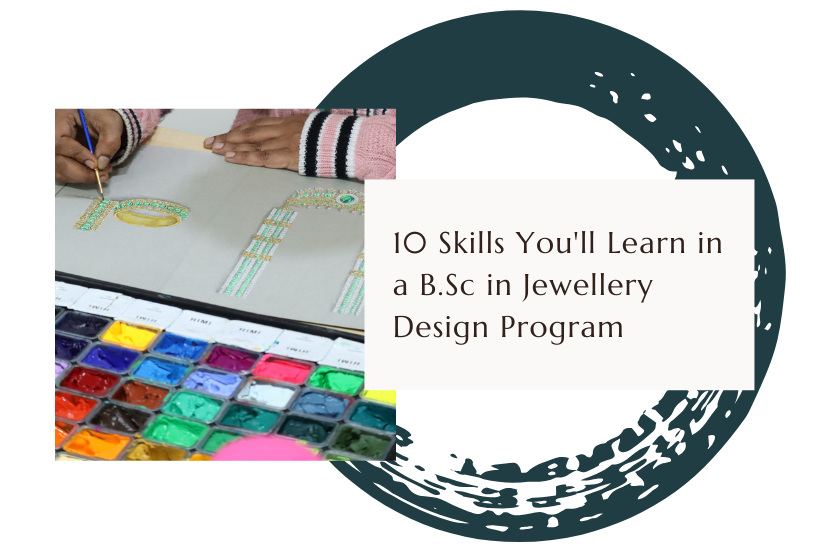
If you are considering a career in the jewellery industry, here are 10 important skills you’ll learn in a BSc in Jewellery Design program.
1. Hand Sketching & Ideation
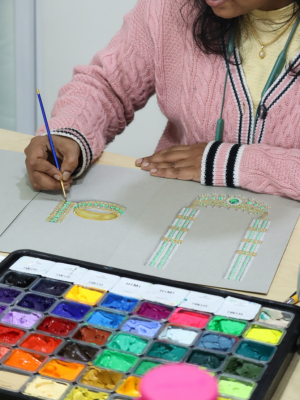
Hand sketching is one of the first skills developed in jewellery design education. Before creating a jewellery design digitally, designers need to communicate their ideas through quick sketches and detailed drawings. You learn how to translate an idea in your mind into a visual concept.
A jewellery design program typically introduces you to:
- Basic shapes and forms
- Jewellery proportions and symmetry
- Perspective and rendering
- Design development
- Creative ideation
- Different jewellery styles
- Technical representation of jewellery
You do not necessarily need to be an expert artist before joining. Sketching is a skill that can be developed through structured practice. The objective is not simply to draw beautifully. It is to communicate a jewellery idea clearly and accurately.
2. CAD Jewellery Design
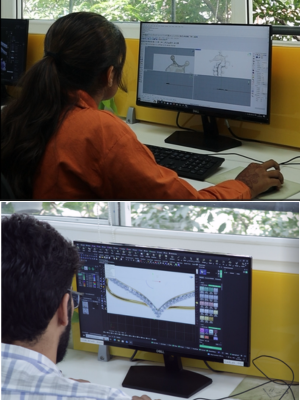
Computer-Aided Design, or CAD, has become an important part of modern jewellery manufacturing. As part of a BSc in Jewellery Design, students learn how to convert hand-drawn concepts into detailed digital jewellery models.
CAD jewellery skills can include working with industry-relevant design software to create:
- Rings
- Earrings
- Pendants
- Bracelets
- Necklaces
- Bangles
- Custom jewellery and Detailed 3D models.
CAD allows designers to examine a design from different angles, make modifications, check proportions, and prepare models for manufacturing. Learning CAD can therefore give students an important advantage when entering a technology-driven jewellery industry.
3. Gemstone Identification & Selection
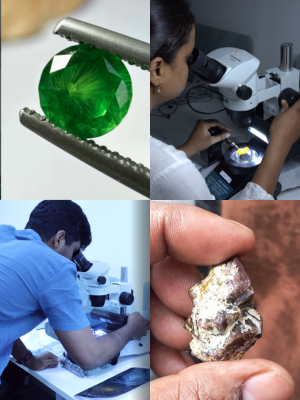
A jewellery designer needs to understand the materials used in a piece. Learning about gemstones helps students make informed decisions about colour, size, shape, durability, quality, and suitability for different jewellery designs.
Students can develop an understanding of:
- Gemstone identification
- Gemstone properties
- Colour and clarity
- Cuts and shapes
- Durability
- Natural and synthetic gemstones
- Gemstone selection for jewellery
This knowledge becomes particularly useful when designing jewellery around a specific gemstone.
4. Jewellery Materials & Metallurgy
Designing jewellery also requires an understanding of the metals used to manufacture it. Students learn about jewellery metals and their characteristics, including concepts related to gold, silver and other commonly used materials.
Understanding materials helps designers make practical decisions about:
- Metal selection
- Karat and purity
- Metal properties
- Alloying
- Colour of gold
- Weight considerations
- Durability
- Manufacturing requirements
This knowledge connects the creative side of jewellery design with the technical side of production. A good jewellery designer should understand whether a design can realistically be manufactured, not just whether it looks attractive on paper.
5. Manufacturing & Production Knowledge
One of the most valuable jewellery design skills is understanding how a design becomes a finished piece. A BSc program can introduce students to jewellery manufacturing processes and help them understand the relationship between design and production.
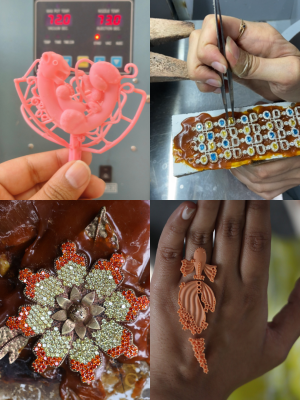
Depending on the curriculum, students may explore areas such as:
- Jewellery casting
- Wax modelling
- Stone setting
- Polishing
- Finishing
- Fabrication
- Manufacturing techniques
- Quality considerations
This practical knowledge helps designers create aesthetically appealing designs while also considering production feasibility. When designers understand manufacturing, they can communicate more effectively with craftsmen, CAD designers, manufacturers, and production teams.
6. Jewellery Design Thinking & Creativity
Creativity is at the heart of jewellery design, but professional design requires more than simply generating new ideas. Students learn how to develop an idea from an initial concept into a complete jewellery collection or product.
Design thinking can involve: Research → Inspiration → Concept → Sketch → Development → CAD → Production
Students learn to consider questions such as:
- Who is the customer?
- What occasion is the jewellery designed for?
- What style or trend is relevant?
- Which materials should be used?
- Is the design commercially viable?
- Can the design be manufactured efficiently?
This develops a structured jewellery designer skill set rather than relying solely on artistic instinct.
7. Jewellery Merchandising & Retail Display
Jewellery design does not end when the product is manufactured. Understanding how jewellery is presented and sold is another useful skill for students entering the industry.
Merchandising can involve understanding:
- Product presentation
- Jewellery collections
- Customer preferences
- Visual merchandising
- Retail displays
- Product categorisation
- Pricing concepts
- Consumer behaviour
Students can learn how jewellery is positioned within a retail environment and how visual presentation influences the customer experience. This knowledge can be especially useful for students interested in careers in jewellery merchandising, retail, brand management, and luxury businesses.
8. Portfolio Building & Presentation
A strong portfolio can help a jewellery design student communicate their skills to potential employers, clients, or businesses. Throughout a BSc program, students can build a collection of their work, showing their development from initial concepts to finished designs.
A jewellery design portfolio may include:
- Hand sketches
- Design concepts
- Technical drawings
- CAD models
- Jewellery collections
- Rendering
- Material exploration
- Final designs
Learning how to present your work professionally is just as important as creating the designs themselves. A well-organised portfolio can demonstrate your creative thinking, technical ability, design process, and understanding of jewellery.
9. Design Presentation & Communication
Jewellery designers often work with people from different parts of the industry. They may need to communicate with manufacturers, merchandisers, retailers, clients, craftsmen, CAD specialists, and business owners.
A jewellery design course helps students develop the ability to explain their concepts clearly through:
- Sketches
- CAD models
- Design presentations
- Mood boards
- Technical details
- Visual references
- Portfolio presentations
Strong communication helps ensure that a design concept is understood correctly from the initial idea through to production.
10. Industry & Business Awareness
Modern jewellery designers increasingly need to understand the business side of the industry. Students can develop an awareness of how the jewellery industry operates, including areas such as design trends, manufacturing, retail, merchandising, branding, and entrepreneurship. This broader understanding can help students explore different career paths after graduation.
Depending on their interests, graduates can work towards roles such as:
- Jewellery Designer
- CAD Jewellery Designer
- Gemologist
- Diamond Grader
- Jewellery Merchandiser
- Jewellery Manufacturer
- Jewellery Entrepreneur
The combination of creative, technical, and business knowledge can give students a more complete jewellery designer skillset.
Why Are These Skills Important for a Jewellery Design Career?
The jewellery industry has evolved significantly with the introduction of digital design, advanced manufacturing technologies, changing consumer preferences, and new retail experiences. Because of this, jewellery designers need a combination of traditional design skills and modern technical skills.
A strong BSc in Jewellery Design can help students develop skills across three major areas:
- Creative Skills
Sketching, ideation, design thinking and visualisation. - Technical Skills
CAD, gemstone knowledge, materials, manufacturing and production. - Business Skills
Merchandising, presentation, communication and industry awareness.
This combination can help students understand jewellery not only as an art form but also as a product and a business.
Can These Jewellery Design Skills Be Used Outside Jewellery?
Yes. Several skills developed through jewellery design education can be applied to other creative and luxury industries. For example, CAD jewellery skills can help build digital design capabilities, while design thinking and visual communication can be useful across product design and luxury retail. Similarly, merchandising, presentation and consumer-focused design can be relevant to broader retail and lifestyle industries. The specific career opportunities available will depend on the student’s additional skills, portfolio, experience, and chosen specialisation.
Is a BSc in Jewellery Design Right for You?
If you enjoy creativity but also want to understand the technical and business side of jewellery, a BSc in Jewellery Design can provide a structured path into the industry. You do not have to begin as an expert sketch artist or jewellery professional. A well-designed undergraduate program can take you through the fundamentals and progressively introduce you to more advanced design and industry skills. The key is to choose a program that combines practical learning, technical training, industry exposure, and design development.
For students looking for a degree-level education in gems and jewellery, the BSc in Gems & Jewellery at IIG South is designed to combine academic learning with practical exposure to the jewellery industry.
Frequently Asked Questions
No. You do not need to be an expert artist before joining. Hand sketching and jewellery drawing can be taught from the fundamentals stage, allowing students to gradually develop their drawing and design abilities.
Yes. CAD jewellery design is an important part of modern jewellery education. Students can learn how to create and develop jewellery designs digitally and understand how digital models connect with the manufacturing process.
Important skills include hand sketching, creative ideation, CAD design, gemstone knowledge, understanding of jewellery materials, manufacturing knowledge, presentation, communication, and merchandising.
Yes. Skills such as design thinking, CAD, visual communication, presentation, and merchandising can be transferable to broader creative, luxury, product design, and retail-related roles.
A BSc can provide the academic foundation and practical skills needed to pursue jewellery design. Your portfolio, software skills, practical experience, industry exposure, and specialisation will also play an important role in your career development.
Yes. CAD has become an important part of contemporary jewellery design and manufacturing. Learning CAD allows designers to develop accurate 3D models and communicate designs more effectively with manufacturers.
Build Your Jewellery Design Skills from the Ground Up
A successful jewellery designer needs more than an eye for beautiful jewellery. You need to be able to imagine, sketch, design, model, understand materials, work with gemstones, communicate ideas, and understand how jewellery reaches the customer. That is why the right BSc program should develop both creative and technical abilities.
If you are exploring a career in jewellery design, gemology, CAD, manufacturing, merchandising, or entrepreneurship, learning these skills can be the first step towards building a career in the gems and jewellery industry.
| Ready to explore a career in gems and jewellery? Explore the BSc in Gems & Jewellery at IIG South and discover how practical, technical, and industry-focused learning can help you build your future in jewellery. |