
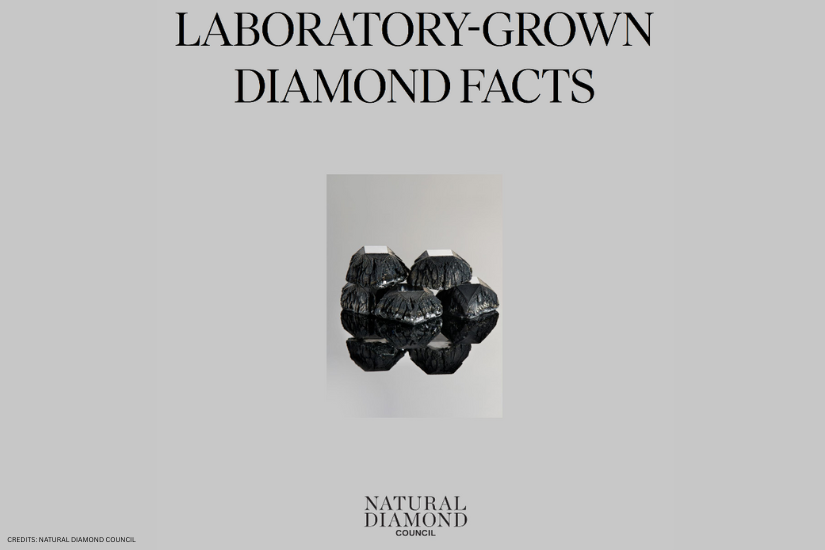
Once seen as the future of ethical luxury, lab-grown diamonds (LGDs) have rapidly become the subject of growing concern. The Natural Diamond Council’s (NDC) 2025 report cuts through the polished marketing to expose the realities hidden behind the sparkle. From unsustainable production methods to tanking prices and inflated retailer margins, LGDs are facing a reckoning.
The Freefall in Lab-Grown Diamond Value
Over the past decade, lab-grown diamonds have experienced a significant decline in value. What once cost over ₹9,00,000 (USD $10,750) for a 1.5-carat LGD now sells for just around ₹1,20,000 (USD $1,455).
Key data from the report:
- Wholesale prices for 1-carat F-G/VS1 LGDs have fallen to just 5% of 2018 prices.
- Retail prices are down to 24% of their 2018 value.
- LGDs currently offer almost zero resale value—a stark contrast to natural diamonds that hold or appreciate over time.
This isn’t just due to improved technology. The real reason is mass industrial-scale production, particularly in China and India. These factories, often operating under high carbon footprints, manufacture millions of carats annually, leading to oversupply and commoditization.
Retailer Profits Skyrocket While Consumers Lose Value
Although LGD prices have plummeted at the source, consumer prices haven’t followed suit.
The report highlights:
- Retail markups have increased from 46% in 2018 to over 84% in 2025.
- Some retailers are applying markups of 300% to 500%.
- A lab-grown diamond that costs ₹25,000 (USD $300) to produce may retail for ₹1.5 to ₹2 lakh (USD $2,000–$2,500).
Consumers are unknowingly paying premium prices for a product that has little long-term financial or sentimental return. A lack of transparency in advertising and sales practices worsens this imbalance.
Green Image or Greenwashed Illusion?
One of the biggest myths surrounding lab-grown diamonds (LGDs) is that they are more environmentally friendly than natural diamonds. While it’s true that LGDs use less water and cause less land disturbance, the narrative often ignores the high carbon footprint of the energy-intensive production process, especially when powered by fossil fuels. This selective messaging amounts to greenwashing, misleading consumers into believing LGDs are a definitively sustainable choice when the full environmental impact tells a more complex story.
The NDC report reveals:
- 70 %+ of LGDs are produced in regions where electricity is primarily coal-based (China, India).
- Carbon emissions for LGDs can range from 17 kg to 260 kg of CO₂ per carat, depending on the energy source.
- Energy-intensive processes like HPHT and CVD require continuous high-heat furnaces, often powered by fossil fuels.
Though LGDs are not mined, they are often fueled by dirty energy, undermining the industry’s eco-friendly claims.
GIA Certification: Moving Toward Clarity
To address growing consumer confusion, the Gemological Institute of America (GIA) has updated its grading approach.
- GIA will no longer issue 4Cs grading for LGDs.
- Future reports will use terms like “Premium,” “Standard,” or “Commercial”, along with clear labelling as “Laboratory-Grown.”
This change acknowledges that LGDs, being mass-produced and identical in quality, do not need the same level of granular grading. It also aims to prevent LGDs from being misrepresented or misperceived as investment-grade stones.
Investment Illusions: A Diamond’s Not Forever—At Least in Labs
While natural diamonds have a historic legacy as heirlooms and stores of value, LGDs behave more like depreciating tech gadgets.
Many consumers are unaware that LGDs have limited or no resale channels. Most jewelers and pawnbrokers refuse to buy them back, and the secondary market remains underdeveloped.
Takeaways for Consumers, Retailers, and Regulators
For Consumers:
- Buy LGDs for affordability and fashion, not investment.
- Always ask for clear certification (GIA, IGI, GCAL).
- Inquire about the energy source and carbon footprint of the LGD.
For Retailers:
- Disclose true resale expectations of LGDs.
- Avoid greenwashing or vague eco-claims.
- Train staff on ethical LGD education.
For Regulators:
- Enforce labelling standards for lab-grown vs. mined diamonds.
- Promote transparency in sustainability metrics.
- Regulate advertising language to prevent misrepresentation.
Know What You’re Really Buying
Lab-grown diamonds are a product of science and innovation, but they should not be confused with the enduring legacy of natural diamonds. While they democratize access to sparkle, their real-world value is fleeting, their green credentials questionable, and their resale options limited.
The real luxury today is not just in appearance—it’s in making informed, conscious, and transparent choices.
Want the latest updates? Explore our News section.
