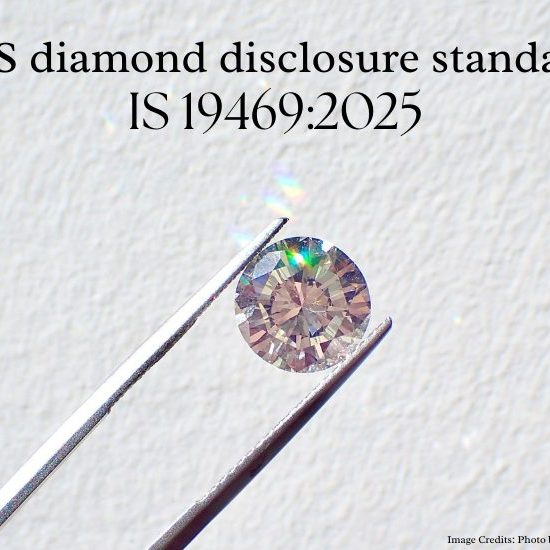
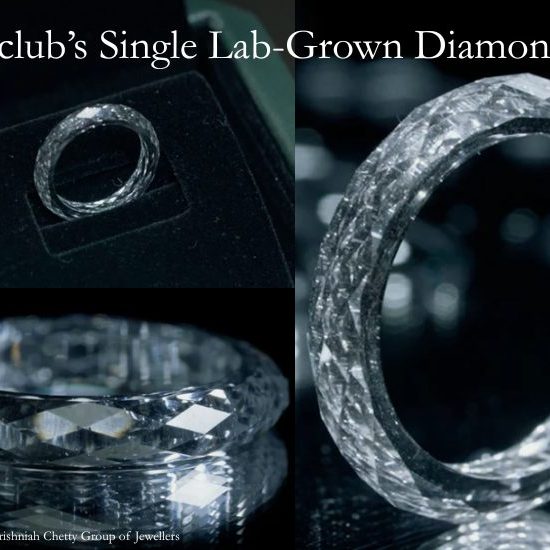
The 4 Cs of Diamonds—Cut, Carat, Clarity, and Colour—are the internationally recognised standards for assessing a diamond’s quality and value. These four criteria provide a common language for Jewellers, Gemologists, and Consumers alike to accurately and consistently assess a diamond’s characteristics.
1. Diamond Cut: The Key to Brilliance
Cut is considered the most critical of the 4 Cs of Diamonds, as it has the greatest impact on a diamond’s brilliance and overall appearance. It refers not to a diamond’s shape (like round or pear), but to how well it has been fashioned and proportioned—specifically, how its facets interact with light. A diamond’s cut determines its:
- Brightness: The total internal and external reflection of white light from a diamond, contributing to its overall sparkle and brilliance.
- Fire: Refers to a diamond’s ability to disperse light into the vibrant colours of the spectrum, creating flashes of rainbow-like hues.
- Scintillation: The flashes of light and sparkle produced when a diamond or the observer moves, caused by the interplay of light reflecting off its facets.
Three factors determine the Cut Grade:
- Proportion: The precise angles and relative measurements of a diamond’s facets that determine how effectively it reflects and refracts light, impacting its brilliance and fire.
- Symmetry: Alignment and balance of facets.
- Polish: Smoothness of the diamond’s surface.
Cut is the only one of the 4 C’s of Diamonds directly shaped by human craftsmanship. Even with exceptional colour and clarity, a poorly executed cut can make a diamond appear dull and lifeless. Diamond cut grading ranges from Excellent to Poor, based on the precision of its proportions and angles. A diamond with an ideal cut reflects light internally from one highly polished facet to another, efficiently channelling light through the table (top surface) to produce optimal brilliance, fire, and scintillation. This precise light performance is critical in maximising the diamond’s overall sparkle and visual appeal.
Types of Diamond Cuts

- Round Brilliant: The most popular diamond shape, featuring 57–58 facets precisely angled to maximise brilliance and fire.
- Step Cuts: Facets arranged in parallel lines (e.g., Emerald, Asscher, Baguette) for a sleek look, less sparkle.
- Rose Cuts: It features a flat base and a domed top with triangular facets, offering a distinctive vintage charm reminiscent of antique jewellery.
- Vintage Cuts: Larger facets with less brilliance; historical significance (Old Mine, European cuts).
- Modified Brilliant Cuts: Variations like pear, oval, marquise, cushion, and heart.
2. Diamond Carat: Weight, Not Size

- Carat refers to the weight of a diamond, not its physical size, although higher carat weight often gives the impression of a larger stone.
- One carat equals 200 milligrams (0.2 grams).
- While many associate bigger diamonds with higher value, carat alone doesn’t determine price. Two diamonds with the same weight can vary greatly in value based on differences in their cut, clarity, and colour. Additionally, prices increase significantly at key weight thresholds (e.g., 1.00 carat, 1.50 carat), not in proportion to size.
- The term originates from the carob seed, once used as a weight reference in ancient gem trading.
- Diamond weight is measured precisely to the hundredth decimal.
3. Diamond Clarity: Nature’s Fingerprint
Clarity evaluates the presence of internal (inclusions) and external (blemishes) under 10x magnification. These natural features formed under immense heat and pressure deep within the Earth.
Clarity Grading Scale:
| Grade | Description |
| FL | Flawless: No inclusions or blemishes under 10x |
| IF | Internally Flawless: Only surface blemishes |
| VVS1–VVS2 | Very, Very Slightly Included: Extremely minute inclusions |
| VS1–VS2 | Very Slightly Included: Minor inclusions |
| SI1–SI2 | Slightly Included: Noticeable under magnification |
| I1–I3 | Included: Obvious flaws affecting brilliance and durability |

- FL (Flawless) and IF (Internally Flawless) diamonds are exceptionally rare and highly sought after, commanding premium prices in the market.
- VS and SI grades often offer the best balance of value and beauty.
- Inclusions can impact a diamond’s durability, brilliance, and light performance, even if invisible
4. Diamond Colour: The Purity of Light
Last of the 4 Cs of Diamonds- Diamond colour, it indicates how little colour a stone contains; the less visible the tint, the more valuable it is. Most gem-quality diamonds carry a faint yellow or brown hue, usually due to trace elements like nitrogen.
Colour Grading Scale:

- D-F: Colourless – representing the highest colour grade, these diamonds are exceptionally rare and highly valuable due to their lack of any perceptible hue.
- G-J: Near Colourless – slight warmth, excellent value.
- K-M: Faint colour – noticeable tint.
- N-Z: Very Light to Light colour – visibly tinted.
Fancy Colour Diamonds
Beyond the D-Z scale, diamonds can occur in an array of natural colours: pink, blue, green, yellow, red, and more. Even with light tones and low saturation, stones that display colour in the face-up position still qualify as fancy colours.
Fancy colours are graded based on hue, tone, and saturation. Some rare colored diamonds rank among the most valuable gemstones in the world.

- Blue: Presence of boron, which also makes the diamond conductive. Gray often results from a mix of boron, hydrogen, or graphite inclusions.
- Green: Natural radiation displaces atoms in the crystal lattice, causing green coloration.
- Pink/Red: Crystal lattice distortion due to high pressure (plastic deformation); no trace element involved. Red is an extreme form of pink.
- Yellow: Presence of nitrogen atoms substituting carbon, absorbing blue light, most common.
- Brown: Plastic deformation of the crystal lattice during formation; dislocations absorb blue light.
- Purple/Violet: Plastic deformation (like pinks) and/or hydrogen traces. Sometimes boron contributes in violet diamonds.
- Orange: Structural lattice defects, sometimes involving nitrogen atoms bonded differently than in yellow diamonds.
- Black: Dense inclusions of graphite, hematite, or other dark minerals. Not caused by atomic-level lattice alteration.
Understanding the 4 Cs—Cut, Carat, Clarity, and Colour—helps you make informed decisions when buying or evaluating a diamond. Each characteristic contributes uniquely to a diamond’s beauty, value, and story. The key is balance: a diamond with the optimal harmony of the 4 Cs delivers the greatest brilliance and lasting value.
Unlock the secrets of diamonds — enroll in our comprehensive Diamond Course to master every property, characteristic, and feature that defines these precious gems.