
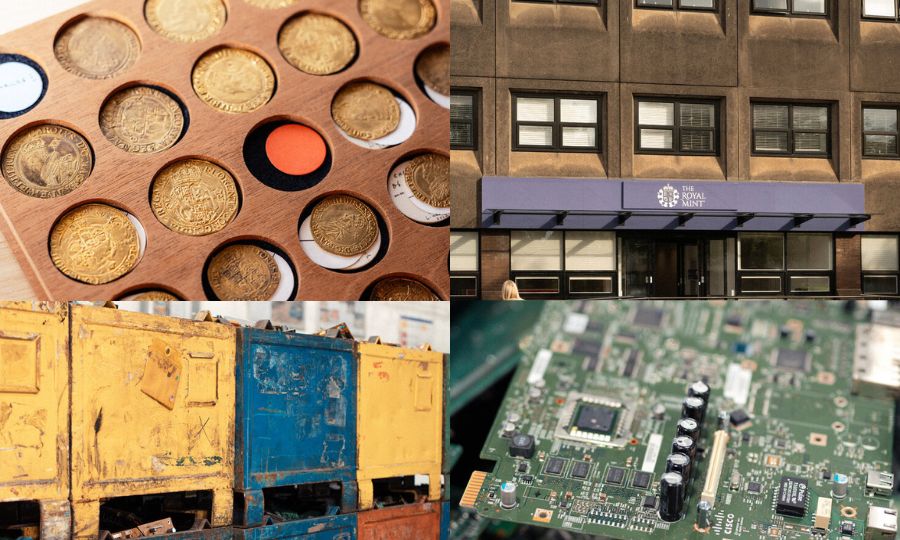
For over a millennium, the Royal Mint has been minting coins depicting the monarchs of England. As the use of cash declines, the Mint is now focusing on recovering precious metals, particularly gold from electronic waste produced during the manufacture of jewellery. Originally located in the Tower of London, the Mint moved to larger premises near Cardiff in the late 1960s to process around 4,500 tonnes of electronic waste per year, including valuable circuit boards from old devices.
The Mint focuses on older electronics because of their higher gold content, using a depopulating machine to extract the components at high temperatures. While gold is the main priority, other metals such as iron and copper are also recovered and sold, promoting sustainability by reducing waste to landfill.
The COVID-19 pandemic has severely impacted coin production, with just 15.8 million coins issued last year, a 90% drop. The Mint has stopped minting foreign coins, focusing on British coins and relying on its precious metals recovery facility for revenue.
Global e-waste is expected to reach 62 billion kilograms, making the Mint’s recovery efforts crucial. Its mining process efficiently produces 99.9% pure gold, and the Mint’s new “886” jewellery line, named after the Mint’s founding year, includes high-end handcrafted pieces at prices to match, such as nine-karat gold earrings for £795.
Image Source: The New York Times


