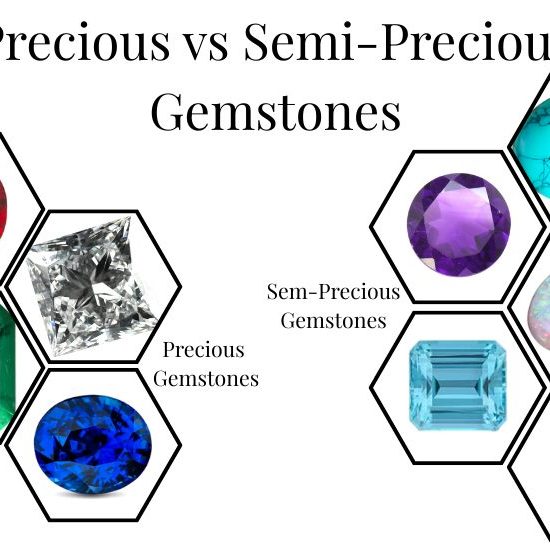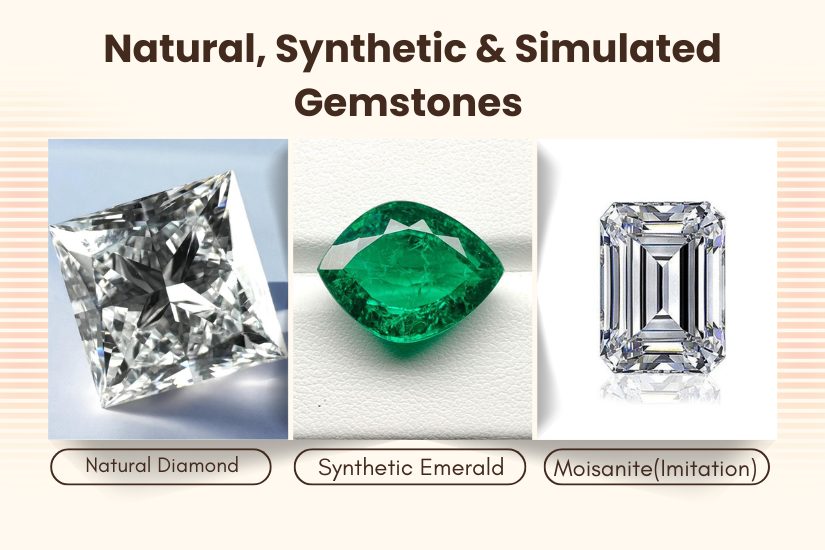
Whether you are shopping for an engagement ring, studying gemology, or building a jewellery business, understanding the difference between natural, synthetic, and simulated gemstones is essential. These three categories are often confused even by experienced buyers, yet they differ significantly in origin, composition, and value.
This guide cuts through the confusion with clear definitions, expert identification tips, and practical buying advice rooted in gemological science.
Natural Gemstones: Earth’s Original Treasures
A natural gemstone is a mineral or organic material formed entirely by geological or biological processes without any human involvement in its internal structure. Most natural gemstones are Inorganic minerals such as diamonds, sapphires, rubies, and emeralds, shaped by heat, pressure, and chemical reactions deep within the Earth over millions to billions of years. Organic gemstones such as pearl, amber, coral, and ivory are produced by living organisms.
After formation, natural gemstones are mined, then cut and polished by skilled artisans. While post-mining treatments such as heat enhancement are common and industry-accepted, the mineral itself must have formed entirely in nature to be classified as natural.
Key Characteristics of Natural Gemstones:
- Inclusions and imperfections are common; these are nature’s fingerprints and can confirm authenticity
- Colour zoning may appear, reflecting changing conditions during growth.
- Each stone is geologically unique.
- Higher price points reflect rarity, provenance, and mining costs.
Most natural gemstones on the market today have undergone some form of treatment to enhance their appearance. Common processes include heat treatment (used widely on sapphires and rubies), fracture filling (emeralds), and irradiation (blue topaz). These are industry-accepted provided they are disclosed. Some treatments, such as routine heat treatment of tanzanite, do not affect value, while others can reduce it.
Want to master gemstone grading and identification? Explore IIG South’s Professional Gemology Courses
Synthetic (Lab-Created) Gemstones: Real Gems, Different Origins
A synthetic gemstone, also called a lab-grown, lab-created, man-made, or cultivated gemstone, shares the same chemical composition, crystal structure, and optical properties as its natural counterpart. The only difference is where it was made: a laboratory, not the Earth.
How Synthetic Gemstones Are Made
Modern laboratories use several sophisticated methods to replicate the conditions under which natural gems form:
- Flame Fusion (Verneuil Method): Powdered chemicals are melted through a high-temperature flame and crystallised on a rotating pedestal. Primarily used for synthetic corundum (sapphire and ruby) and spinel.
- Hydrothermal Growth: Replicates deep-earth conditions using a pressurised, heated autoclave filled with nutrient-rich solution. Crystals grow on a seed plate, the primary method for synthetic quartz and emeralds.
- Flux Growth: Chemical components are dissolved in a heated flux solution; crystals form as it cools slowly. Used for high-quality emeralds and alexandrites.
- HPHT (High Pressure, High Temperature): Simulates conditions deep in the Earth’s mantle using massive steel presses, the primary method for lab-grown diamonds.
- CVD (Chemical Vapour Deposition): Carbon atoms precipitate onto a seed in a vacuum chamber, building a diamond layer by layer, the second major method for synthetic diamonds.
Why Buyers Choose Lab-Created Gems:
- Significantly lower cost, a lab-grown blue sapphire can cost 100x less than an equivalent natural stone
- Fewer inclusions, more consistent colour and clarity
- Ethical and eco-conscious alternative to mining
- Wider colour and size options
That said, synthetic gemstones carry little to no resale value. They are ideal for fashion jewellery and budget-conscious buyers, but should not be considered a financial investment.
Simulated (Imitation) Gemstones
A simulated gemstone, also called an imitation, simulant, or faux gemstone, is any material that resembles a natural gemstone in appearance but does not share its chemical composition or physical properties. Simulants are not the same as synthetics.
Common Simulants:
- Cubic Zirconia (CZ): The most widely used diamond simulant. Fully lab-created, sparkly, and affordable — but chemically unrelated to diamond.
- Synthetic Moissanite: Currently the closest diamond simulant in appearance. Also lab-grown, and increasingly sold as a standalone gemstone in its own right.
- Glass: The oldest and simplest simulant — can be coloured to imitate almost any gem.
- Synthetic Spinel: Easily produced and used to imitate sapphire, aquamarine, and peridot.
- Plastic and resin: Used in low-cost costume jewellery.
Simulants are legal and can be used in fashion jewellery or decorative items, but they must always be clearly disclosed. They are prone to wear and scratching and are generally not suitable for everyday fine jewellery.
How Experts Identify Natural vs Synthetic Gemstones
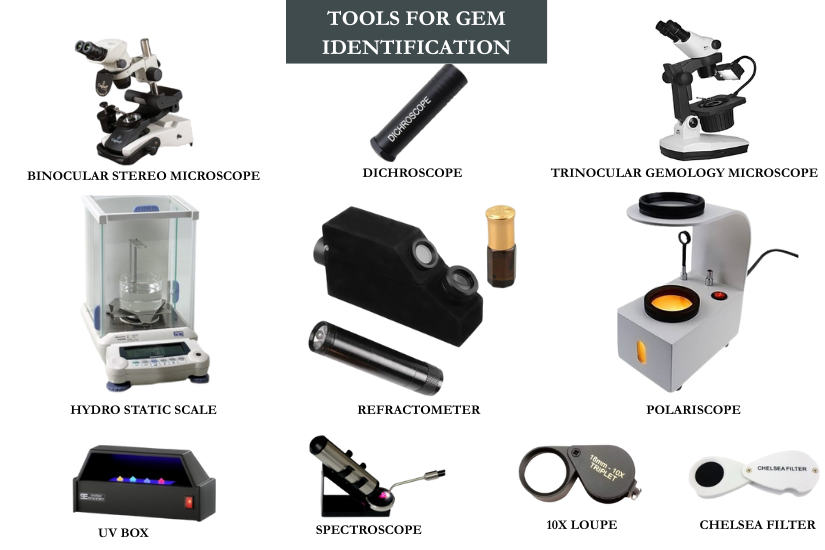
Because synthetic gemstones share the same chemical and optical properties as natural ones, the naked eye cannot reliably distinguish between them. Professional gemologists use specialised equipment to differentiate them.
- Magnification (Loupe or Microscope): The most important tool. Natural stones show characteristic inclusions like mineral crystals, healed fractures, and silk needles. Synthetic stones may show curved growth lines, gas bubbles (flame fusion), or flux remnants.
- Refractometer: Measures refractive index to confirm gem identity, though not necessarily its origin.
- Spectroscope: Analyses light absorption patterns. Trace element differences between natural and synthetic stones can often be detected here.
- UV Fluorescence: Synthetic rubies and sapphires often display different fluorescence patterns under UV light compared to their natural counterparts.
- Advanced Lab Testing: Leading institutions use chemical analysis and photoluminescence spectroscopy for conclusive origin reports.
Certification from a reputed gemological laboratory is the most reliable way to confirm a stone’s classification. Always request a certificate when purchasing high-value gemstones.
Build your gemological expertise and learn professional testing methods. Enrol in IIG South’s Master’s in Gemology Course.
Which Type of Gemstone Should You Choose?
Choose Natural If You:
- Value rarity and provenance
- Are purchasing for investment, heirlooms, or long-term value retention
- Prefer unique stones with natural character and inclusions
- Are buying certified fine jewellery from reputable sources
Select Lab-Created (Synthetic) If You:
- Want the same beauty and gemological properties at a fraction of the cost
- Prioritise ethical and environmentally conscious sourcing
- Are buying fashion jewellery or casual everyday wear
- Need larger carat sizes or specific colours within a set budget
Opt for Simulated If You:
- Are buying costume or fashion jewellery for occasional wear
- Need a very low-cost decorative piece
- Understand and accept that the stone is not chemically equivalent to the gem it imitates
As a buyer, you have the right to know exactly what you are purchasing. Always ask for full disclosure of a stone’s origin, treatment history, and any certifications before completing a purchase.
Ethical & Environmental Considerations
The ethical dimension of this conversation is increasingly important. Gemstone mining, in some regions, has been associated with environmental degradation and poor labour practices. However, it also provides vital livelihoods to millions of workers and communities in developing nations. Responsible, certified sourcing, through initiatives like the Kimberley Process for diamonds, has significantly improved transparency.
Lab-grown gemstones avoid the disruption of mining but are energy-intensive to produce and carry their own carbon footprint. Neither option is perfect; the ethical choice ultimately depends on how and where the stone is sourced or manufactured.
Ready to deepen your knowledge of gemstones and gemology? Explore IIG South’s full range of courses, workshops, and certifications, trusted by jewellery professionals across the industry. Visit iigsouth.com to learn more.
Frequently Asked Questions
No. Synthetic gemstones share the same chemical composition, crystal structure, and physical properties as natural gemstones. They are real gemstones, just grown in a laboratory rather than formed in the Earth.
In most cases, no. Even experienced jewellers require magnification and specialised instruments to differentiate between the two.
Yes, typically by a significant margin. A natural blue sapphire can cost many times more than an equivalent lab-grown one of the same size and grade. This reflects the rarity of natural stones.
Moissanite is a simulant; it resembles a diamond in appearance but is made up of a different mineral (silicon carbide). Most moissanite on the market is lab-grown, as natural moissanite is extraordinarily rare, found primarily in meteorites.