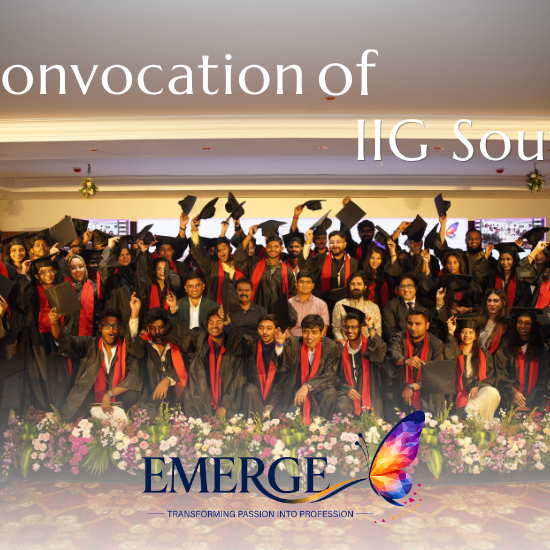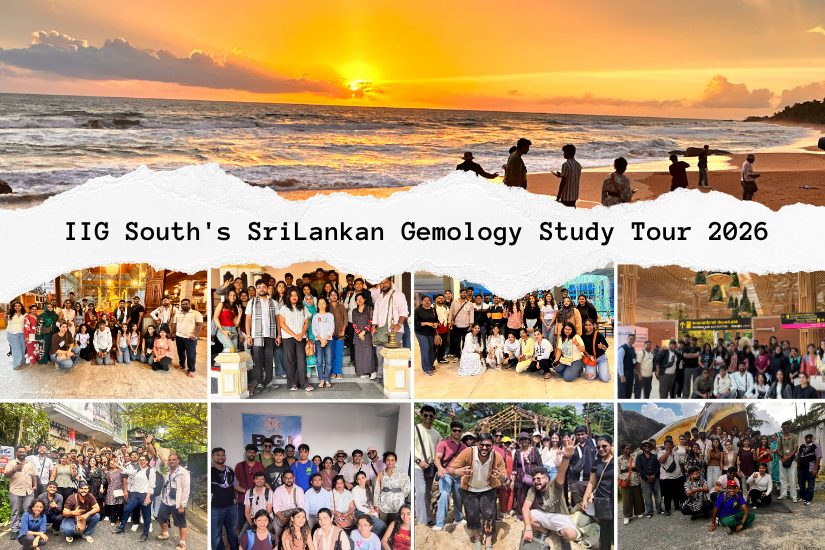
Some lessons in gemology cannot be taught from a desk. They have to be felt, in the weight of wet gravel pulled from a mine shaft, in the heat of a charcoal furnace softening a rough stone, in the quiet negotiation of a rough gem market at dawn. That is precisely why IIG South organised an exclusive Sri Lanka Gemology Study Tour 2026, a six-day, mine-to-market immersion that took our students into the very soil where some of the world’s finest coloured gemstones are born.
From 22nd to 27th June 2026, a group of IIG South students traversed the gem heartland of Sri Lanka, covering Colombo, the UNESCO World Heritage city of Kandy, the storied gem capital Ratnapura, the historic port of Galle, and the coastal retreat of Bentota. What followed was six days of hands-on learning that no classroom in Bangalore or anywhere could replicate.
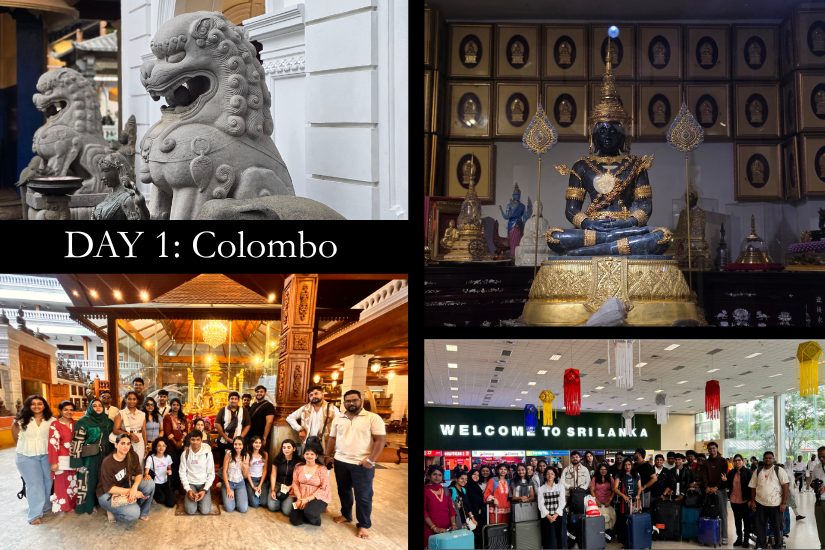
Day 1: Colombo: Setting Out
The tour began with a city orientation in Colombo, taking in the Gangaramaya Buddhist Temple, one of Sri Lanka’s most significant religious and cultural sites, followed by a visit to Galle Face Green and the Old Parliament Building. The day gave students their first sense of Sri Lankan history, culture, architecture, and religious heritage before the group moved inland toward the country’s gem-mining heartland.
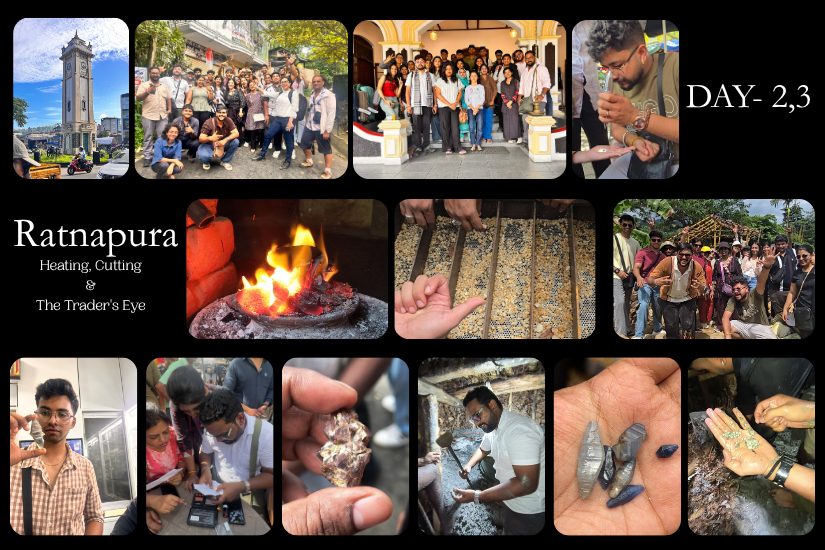
Day 2: Ratnapura: Heating, Cutting & the Trader’s Eye
Ratnapura, whose very name translates to ‘City of Gems’ in Sanskrit, is the epicentre of Sri Lanka’s alluvial gem mining industry. Students explored traditional charcoal-gem heating techniques and observed local craftsmen polishing and cutting gemstones. They closely followed each stage of the process while receiving detailed explanations at every step. The group then met local gem traders to view finished cut and polished stones and understand how the polished gemstone trade actually functions on the ground in Ratnapura.
The day closed with a visit to a private Gem Crystal Museum, where students examined rare, large gem crystals and gemstones extracted from Ratnapura’s mines and spoke directly with the collector to learn about the geological significance of the specimens.
Day 3: Inside an Active Sapphire Mine
This was the most intensive day of the tour. The morning began at the Amba Gaha Yata Rough Gem Market, one of Ratnapura’s most well-known rough gem trading grounds, followed by a visit to the Clock Tower Rough Market for further market observation.
Students then visited an active pit mine, observing the full gem extraction process and meeting the local miners who do this work daily. Students entered the active mine and witnessed the real-time extraction of sapphires deep inside the shaft, experiencing the mining process firsthand. The day ended at the wider Ratnapura Gem Market, tying together everything observed since the morning.
Day 4: Structured Gemology Workshop & China Fort Market
Day four shifted from field observation to structured classroom-style learning, delivered on-site in Ratnapura. The workshop covered an introduction to gems and jewellery, the formation of gemstones and crystal systems, gemstone grading, and ge, pricing, followed immediately by a market visit so students could apply the theory in real time. The session also included hands-on handling of a variety of natural and synthetic gemstones, sharpening students’ eyes for distinguishing the two. The day concluded with a visit to the China Fort gem market, another key trading hub in the region.
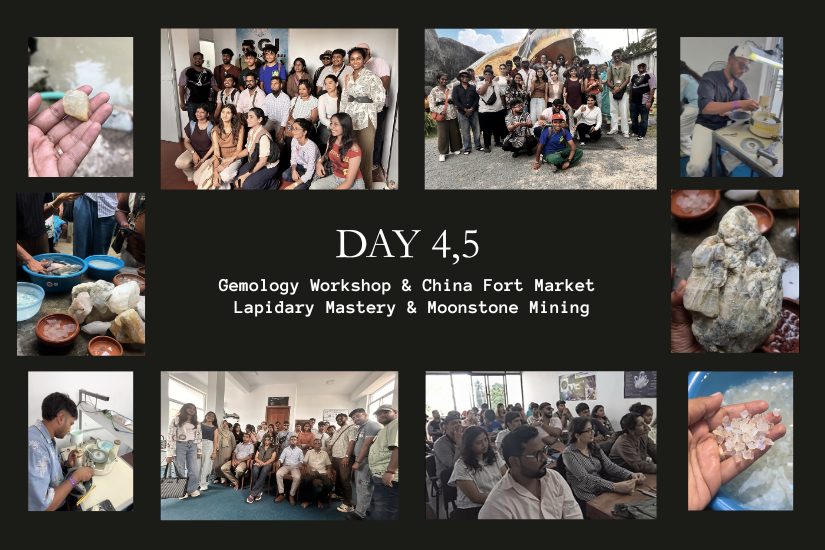
Day 5: Bentota: Lapidary Mastery & Moonstone Mining
The final field day took the group to a lapidary workshop conducted by Mr. Harishchandra Bentota, a respected local craftsman, where students observed and practised advanced cutting and polishing techniques.
The tour closed at the Meetiyagoda Moonstone Mine, where students walked through the entire moonstone journey, from extraction underground to cutting and final polishing, for one of Sri Lanka’s most distinctive gemstones. It was a fitting final stop: a complete mine-to-finish picture for a stone found almost nowhere else in such concentration.
By the end of the tour, students had moved through every stage of the gem trade from extraction, heating, cutting, polishing, grading, and market trading, across some of Sri Lanka’s most significant gem sites. For many, descending into an active sapphire mine and watching moonstone come out of the earth in Meetiyagoda were the experiences that made the textbook material finally click into place.
Frequently Asked Questions
The tour is primarily designed for students enrolled in IIG South’s gemology and jewelry designing programmes and students who are interested knowing more about gemstones.
Yes, students entered an active pit mine in Ratnapura and observed the live extraction of sapphire alongside local miners.
Students are expected to have completed at least the foundational modules of their gemology course before participating, so they can contextualise what they observe in the field. The more gemological knowledge a student brings in, the more they take out.
Access is the key difference. IIG South’s industry relationships allowed students into active mine sites, a private gem crystal museum, rough and cut gem markets, and a personal lapidary workshop with a named master craftsman, none of which are accessible to general tourists.
IIG South is committed to providing field-based learning as a core part of its curriculum. Follow IIG South’s social media channels or contact the admissions team for upcoming tour announcements.
| LEARN GEMOLOGY THE IIG SOUTH WAY — MINE TO MARKET |
| Experiences like the Sri Lanka Study Tour are why IIG South graduates hit the industry running. Our courses combine world-class classroom instruction with rare, real-world field access. Explore Gemology Courses Call / WhatsApp: +91 70196 99357, IIG South, Richmond Town, Bangalore |