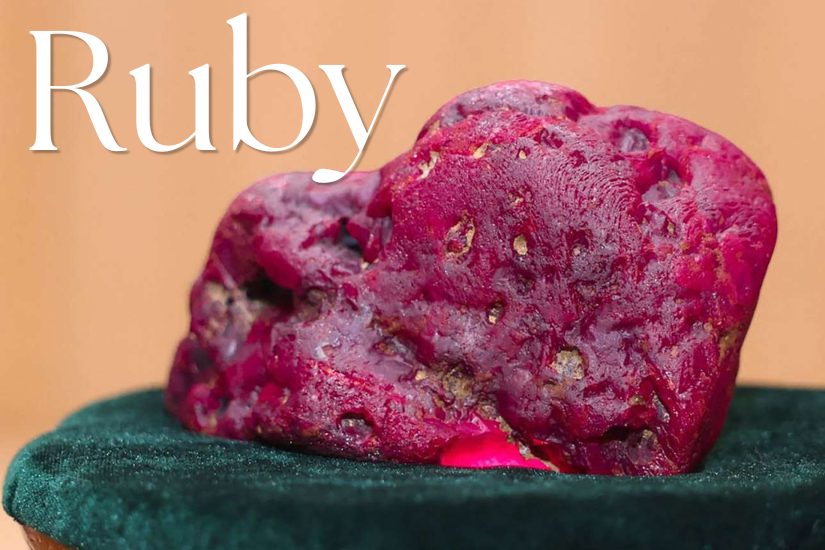
In mid-April 2026, miners working in the legendary Mogok Valley of Myanmar unearthed what is now being called one of the most significant ruby discoveries in modern gemological history. Weighing in at an extraordinary 11,000 carats (2.2 kilograms), the rough mogok ruby has sent ripples through the global gem trade. It offers gemology students a rare real-world case study in colour grading, valuation theory, and provenance of the coloured gemstone trade.
The Discovery: What We Know
At 11,000 carats, the stone ranks as Myanmar’s second-largest ruby by weight ever recorded, surpassed only by a 21,450-carat (4,290-gram) ruby found in the same Mogok region in 1996. For comparison, a standard engagement ring ruby typically weighs between 0.5 and 2 carats. This single rough stone contains the equivalent of thousands of such gems within its mass.
The Gemological Profile: Why Smaller Can Be More Valuable
This is where the story becomes truly instructive for gemology students. Despite being roughly half the weight of the 1996 record stone, Myanmar’s officials and gemologists have assessed the 2026 ruby as more valuable than its predecessor. This distinction cuts to the heart of how professional coloured gemstone valuation actually works.
Key Gemological Characteristics
Colour: The stone displays a vivid purplish-red hue with subtle yellowish undertones, a hallmark of high-quality Mogok origin. In ruby grading, colour is the single most dominant value driver. A deeply saturated, fluorescent red with no dark zones commands significant premiums regardless of carat weight.
Clarity: The stone is described as having moderate transparency, which is important for a ruby of this size. Large rubies with acceptable transparency are exceptionally rare.
Lustre: Classified as vitreous (glassy), indicating a superior crystal structure with a well-formed surface that reflects light efficiently.
Treatment Status: Critically, the ruby is described as completely natural and untreated. This single attribute transforms its market position entirely. In today’s coloured gemstone market, untreated Burmese rubies command premiums of 5 to 10 times over treated stones of comparable size and colour. Heat treatment, used to enhance colour and reduce inclusions, is so common in rubies that a genuinely untreated, high-quality specimen is exceptionally rare.
What Is “Pigeon Blood” Red? A Primer for Students
Mogok rubies are globally celebrated for their iconic “pigeon blood” red, a term used in the trade to describe a specific quality of colour that is deeply saturated, vivid, and carries a natural red fluorescence that seems to glow from within. This effect is produced by:
- Trace chromium in the crystal lattice, which absorbs green and yellow light while transmitting red.
- Microscopic silk-like inclusions (rutile needles) that scatter light internally, softening the appearance.
- UV fluorescence, under ultraviolet light, a fine Mogok ruby glows strongly from within, an effect visible even in natural daylight.
The combination of these factors creates a stone that appears to radiate light rather than simply reflect it, and it is this quality that has made Mogok rubies the benchmark for the finest rubies in the world for centuries.
The Valuation Lesson: The Six Factors That Drive This Stone’s Importance
For students of gemology and gem valuation, the 2026 Mogok ruby is a masterclass in multi-factor assessment. No single attribute alone explains the excitement; it is the combination of all six that places this stone in conversation with the most legendary rubies in history:
- Untreated natural state: No heat or chemical enhancement whatsoever
- Colour quality: Vivid purplish-red with yellowish undertones, high-quality grade
- Vitreous lustre: Glassy surface indicating superior crystal structure
- Mogok provenance: The world’s most prestigious ruby origin
- Documented chain of custody: State-verified from the extraction point
- Comparative quality: Officially assessed as superior to the heavier 1996 stone
This is consistent with a fundamental principle of coloured gemstone valuation: a 2-carat untreated pigeon-blood ruby of exceptional quality will routinely outperform a 5-carat treated stone of lesser quality. Weight is a starting point, not a conclusion.
Why This Discovery Matters for Gemology Students
The 2026 Mogok ruby is more than a headline. It is a live, real-world intersection of:
- Colour theory and grading: Understanding why hue, saturation, and tone matter more than weight.
- Treatment detection: Why “untreated” status commands such a premium and how labs certify it.
- Provenance documentation: The growing importance of origin traceability in the coloured stone market.
- Ethics in the gem trade: How conflict minerals policies are reshaping sourcing decisions globally
- Market valuation principles: How a smaller stone can be worth more than a larger one
At IIG South, our gemology programmes cover all of these dimensions, from the science of colour and light to real-world trade practices and ethics. Discoveries like this one are precisely why gemology is a field that rewards both scientific rigour and human curiosity.
Interested in building a professional career in gemology and the gem trade? Explore IIG South’s Gemology courses and take the first step toward understanding the world’s most fascinating materials.