The jewellery industry is undergoing a significant transformation. Technology, sustainability, and changing consumer preferences are redefining how jewellery is designed, manufactured, and marketed. For jewellery designers entering the industry in 2026, creativity alone is no longer sufficient.
Today’s jewellery designers must combine artistic creativity, digital design skills, technical expertise, and business understanding to remain competitive in the global market.
India’s gems and jewellery sector is expanding rapidly, supported by international trade opportunities, increased demand for customised jewellery, and the growing popularity of lab-grown diamonds. Cities like Mumbai, Surat, Jaipur, and Bengaluru are emerging as major hubs for jewellery design, manufacturing, and gemstone trading.
For students planning a career in jewellery design or professionals seeking to upgrade their skills, understanding the most in-demand skills for jewellery designers in 2026 is essential.
This guide explores the top 10 must-have skills that will define successful jewellery designers in the coming years.
Why Jewellery Designers Need New Skills in 2026
The jewellery industry is evolving due to several major factors:
- Rise of lab-grown diamonds and alternative gemstones
- Growing consumer demand for sustainable and ethical jewellery
- Increased use of CAD technology and 3D printing
- Expansion of online jewellery retail
- Increasing demand for custom and personalised jewellery
As the industry becomes more technologically driven, jewellery designers must balance traditional craftsmanship with modern digital tools.
Designers who develop these skills can unlock opportunities in:
- Luxury jewellery brands
- Jewellery manufacturing companies
- Design studios
- Freelance design consulting
- Independent jewellery businesses
1. CAD Jewellery Design and 3D Modelling
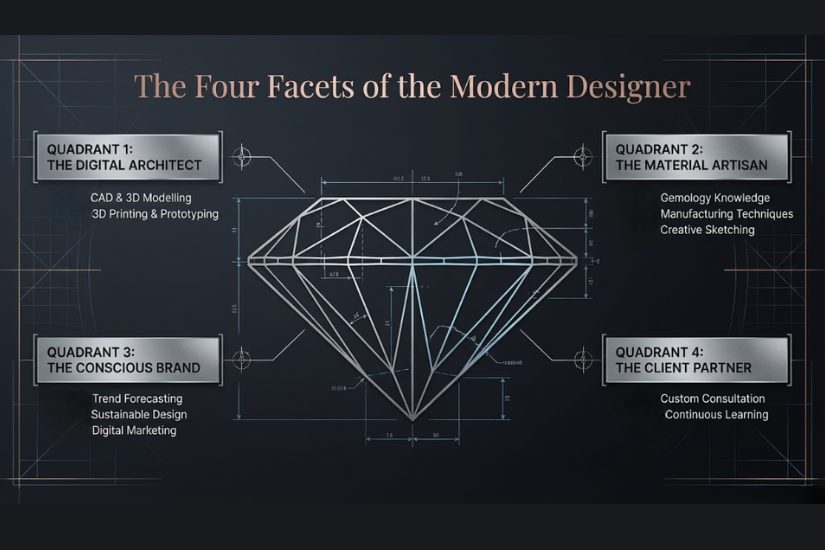
Computer-Aided Design (CAD) has become one of the most essential skills in the modern jewellery industry. CAD software allows designers to create accurate 3D jewellery models that can be easily modified and prepared for manufacturing.
Benefits of CAD in Jewellery Design
- Precise gemstone placement
- Accurate metal weight estimation
- Realistic jewellery rendering
- Easy design modifications
- Efficient communication with manufacturers
Popular Jewellery CAD Software
- Rhino (Rhinoceros 3D)
- MatrixGold
- JewelCAD
- ZBrush
- Blender (for rendering and presentation)
CAD proficiency allows designers to move from concept to production faster and more efficiently, making it one of the most valuable skills in the jewellery industry.
Want to master CAD jewellery design? Explore our Masters in Jewellery Design course at IIG South.
2. 3D Printing and Rapid Prototyping
3D printing technology has revolutionized jewellery manufacturing. Using CAD files, designers can create highly accurate wax or resin models that are used in the casting process.
Advantages of 3D Printing
- Faster design development
- Reduced prototyping costs
- Accurate casting models
- Ideal for custom jewellery orders
Designers who understand the entire digital workflow from CAD design to 3D printing and casting have a major advantage in the industry.
3. Gemology and Gemstone Knowledge
Understanding gemstones is a fundamental skill for jewellery designers. Gemology knowledge helps designers choose stones that enhance both beauty and durability in jewellery pieces.
Key Gemology Skills
- Understanding gemstone properties
- Identifying natural vs lab-grown diamonds
- Knowledge of gemstone cuts and shapes
- Evaluating colour, clarity, and treatments
- Understanding gemstone durability
Designers with gemstone expertise can create high-value jewellery pieces and provide better guidance to clients. Build a strong foundation in gemstones. Explore our Gemology Courses.
4. Jewellery Manufacturing Knowledge
Many beginner designers focus only on aesthetics without understanding how jewellery is produced. Knowledge of jewellery manufacturing ensures that designs are practical, durable, and cost-effective to produce. Learn jewellery manufacturing from scratch. Explore our Jewellery Manufacturing Course.
Essential Manufacturing Techniques
- Wax carving and casting
- Stone setting techniques
- Metal finishing and polishing
- Engraving methods
- Basic metallurgy
Understanding production processes helps designers avoid design flaws that can increase manufacturing costs or cause structural issues.
5. Creative Sketching and Concept Development
Despite digital advancements, hand sketching remains an essential skill in jewellery design. Sketching allows designers to capture ideas and communicate design concepts effectively.
Important Sketching Skills
- Jewellery proportions and structure
- Gemstone rendering techniques
- Metal reflections and textures
- Concept storytelling
Sketching remains one of the fastest ways to transform ideas into visual concepts.
6. Trend Forecasting and Market Awareness
Jewellery design is not just about creativity, it is also about understanding consumer demand. Designers must stay informed about global jewellery trends, fashion movements, and customer preferences.
Jewellery Trends Shaping 2026
- Lightweight everyday jewellery
- Sustainable jewellery collections
- Lab-grown diamond jewellery
- Coloured gemstone statement pieces
- Personalised and custom jewellery
Designers who understand trends can create jewellery that resonates with modern consumers.
7. Sustainable and Ethical Jewellery Design
Sustainability is becoming one of the most important considerations in the jewellery industry. Consumers increasingly prefer jewellery that is ethically sourced and environmentally responsible.
Sustainable Jewellery Practices
- Using recycled precious metals
- Working with ethical gemstone suppliers
- Designing durable, long-lasting jewellery
- Promoting transparency in sourcing
Designers who adopt sustainable practices can attract eco-conscious luxury buyers.
8. Digital Marketing and Jewellery Branding
Modern jewellery designers often build personal brands and online businesses. Understanding digital marketing helps designers reach global audiences.
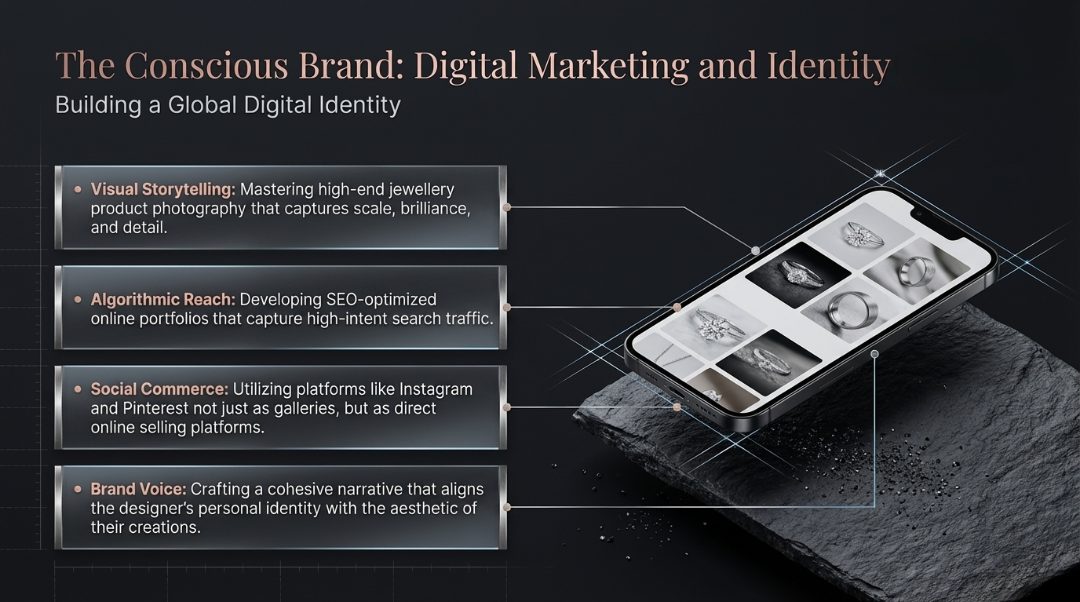
Important Marketing Skills
- Jewellery product photography
- Social media branding
- SEO-optimised online portfolios
- Online jewellery selling platforms
- Storytelling and brand identity
Platforms like Instagram, Pinterest, and e-commerce websites are powerful tools for jewellery promotion.
9. Client Consultation and Custom Jewellery Design
Custom jewellery has become one of the fastest-growing segments in the jewellery market. Designers must develop strong client consultation skills to understand customer preferences.
Key Consultation Skills
- Understanding client expectations
- Suggesting gemstones and metals
- Creating personalised designs
- Managing custom orders
This ability helps designers build long-term relationships and premium brand value.
10. Continuous Learning and Industry Awareness
The jewellery industry constantly evolves with new technologies, materials, and consumer trends. Successful designers commit to continuous learning and professional development.
Ways to Stay Updated
- Attending jewellery trade shows
- Learning new CAD tools
- Studying gemstone innovations
- Participating in design workshops
Continuous learning ensures designers remain competitive in the global jewellery industry. See how IIG South students learn beyond the classroom. Check out our Industrial Visits and Guest Lectures.
Career Opportunities for Jewellery Designers
Designers with strong technical and creative skills can pursue several career paths.
Popular Jewellery Design Careers
- Jewellery Designer
- CAD Jewellery Designer
- Jewellery Product Developer
- Luxury Brand Designer
- Jewellery Entrepreneur
With experience, designers can also launch their own jewellery brands or design studios.
Future of Jewellery Design Careers
The future of jewellery design lies at the intersection of technology, sustainability, and creativity. Designers who master modern skills such as CAD modelling, gemology, digital marketing, and sustainable design will be best positioned to succeed in the evolving jewellery industry.
For students and aspiring professionals, investing in these skills today can lead to exciting opportunities in one of the world’s most creative industries.
Frequently Asked Questions:
Jewellery designers in 2026 need skills such as CAD design, gemology, manufacturing, trend forecasting, sustainability practices, and digital marketing.
Yes. CAD software allows designers to create accurate 3D jewellery models, test gemstone settings, and prepare designs for production.
Yes. Many jewellery designers launch independent brands, offer custom design services, or sell jewellery through online platforms.
Yes. India’s gems and jewellery sector continues to grow offering opportunities in design, manufacturing, gemstone trading, and entrepreneurship.
Ready to turn your passion for jewellery into a career? Explore all courses at IIG South and take the first step today.