India’s jewellery industry is changing faster than ever. For generations, jewellery buying in India was closely connected to family jewellers, regional craftsmanship and personal relationships. Today, consumers have far more choices. National jewellery chains, luxury retailers, digital-first brands and established regional players are all competing for the same customer.
So, which are the top jewellery brands in India in 2026?
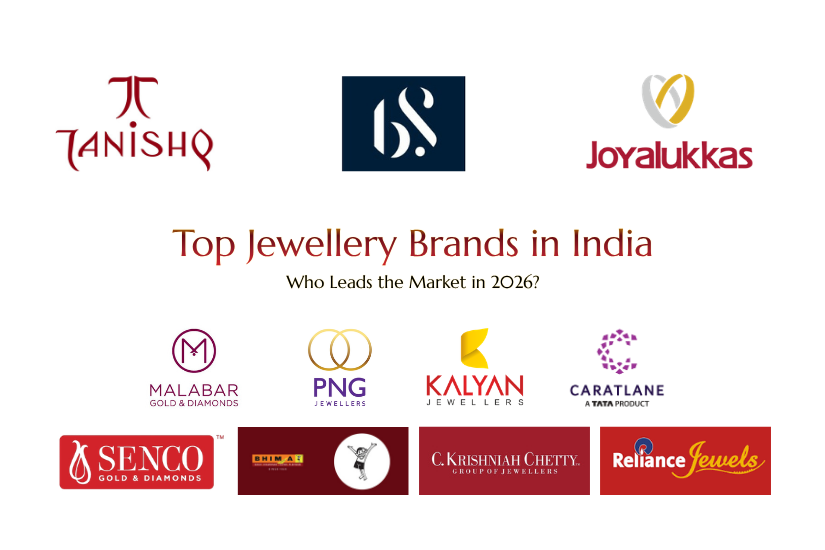
Names such as Tanishq, Kalyan Jewellers, Malabar Gold & Diamonds, Joyalukkas and CaratLane continue to have a strong presence across the Indian market. At the same time, regional jewellery houses remain extremely influential in their home markets.
But market leadership is no longer simply about the number of stores. Brand trust, design, technology, transparency, customer experience, digital presence and the ability to understand changing consumer preferences all matter.
For students planning a career in jewellery, this shift is particularly important. Understanding the brands shaping the industry can provide a much clearer picture of where opportunities exist in design, gemology, merchandising, manufacturing, retail and management.
The Indian Jewellery Market in 2026
India remains one of the world’s most important jewellery markets, with gold continuing to play a major cultural and financial role. However, the modern jewellery customer is different from the customer of a decade ago. Younger buyers are increasingly interested in:
- Contemporary jewellery designs
- Diamond and gemstone jewellery
- Lightweight everyday pieces
- Personalised designs
- Branded jewellery
- Transparent pricing and certification
- Jewellery that combines tradition with modern styling
At the same time, high gold prices are influencing buying behaviour.
Top Jewellery Brands in India in 2026
There isn’t one universally accepted ranking of India’s jewellery brands because “market leader” can mean different things: revenue, store network, brand recognition, geographical reach or strength in a particular jewellery segment. Instead, here are some of the most influential names shaping India’s organised jewellery market.
1. Tanishq
Tanishq is one of the most recognisable jewellery brands in India and operates under Titan Company. Its strength lies in combining traditional Indian jewellery preferences with contemporary design and a highly organised retail experience. Tanishq has built significant consumer trust around quality, design and branded jewellery. Its extensive retail network also gives it a strong presence across different regions and customer segments.
The wider Titan jewellery business remains one of the biggest forces in India’s organised jewellery market.
2. Kalyan Jewellers
Kalyan Jewellers has grown from its strong South Indian roots into a major national jewellery retailer. One of its biggest strengths is its understanding of regional jewellery preferences. India does not have a single jewellery culture; bridal traditions, gold preferences, designs, and purchasing habits can vary significantly from one state to another. Kalyan has continued expanding its footprint while developing regional strategies to compete with local jewellery players.
For jewellery professionals, Kalyan is an interesting example of how a large brand can combine scale with an understanding of regional markets.
3. Malabar Gold & Diamonds
Malabar Gold & Diamonds is another major name in India’s jewellery retail landscape. The brand has a particularly strong presence in South India while also expanding across India and international markets. Its product portfolio covers gold, diamonds and other jewellery categories, allowing it to serve customers looking for both traditional and contemporary pieces.
Malabar’s continued visibility alongside other national retailers also demonstrates how India’s organised jewellery sector has become increasingly competitive.
4. Joyalukkas
Joyalukkas built its reputation on scale and reach into the Indian diaspora, with a particularly strong presence across the Middle East alongside its domestic network. It’s one of the handful of brands genuinely competing on an international footing, not just a domestic one, and it remains a major employer across retail, design, and merchandising roles. Its success demonstrates an important feature of the Indian jewellery business: regional understanding can become a major competitive advantage when combined with strong branding, retail infrastructure and customer service.
5. CaratLane
CaratLane represents a slightly different side of the jewellery market. With its strong digital-first identity and focus on contemporary jewellery, the brand has helped make jewellery shopping more accessible to younger consumers. Its relationship with the Titan ecosystem also connects digital jewellery retail with one of India’s largest jewellery businesses.
The growth of brands such as CaratLane shows that jewellery retail is no longer restricted to traditional showrooms. Customers can discover products online, compare designs, understand specifications and then decide whether to purchase digitally or visit a store. It’s a useful case study for anyone interested in how jewellery retail is adapting to e-commerce.
6. Senco Gold & Diamonds
Senco Gold & Diamonds is another important organised jewellery retailer, particularly known for its strong presence in Eastern India(West Bengal and Odisha). The brand has expanded its reach while maintaining its regional identity. Its story is a useful reminder that India’s jewellery market isn’t dominated exclusively by a handful of national brands. Regional players can build significant scale by understanding local customers, traditions and buying behaviour.
7. Regional Jewellery Brands
India’s jewellery industry would be incomplete without its regional jewellery houses. Brands such as Bhima, Jos Alukkas, Krishniah Chetty and other established regional retailers continue to have strong customer relationships in their respective markets. Regional jewellers often have something national chains find difficult to replicate: deep knowledge of local traditions and long-standing relationships with families. This makes India’s jewellery market highly competitive rather than a simple race between a few national brands.
8. Rising Contemporary and Digital First Brands
A newer wave of brands is reshaping the mid-premium end of the market, and they’re worth watching even though none of them yet match the scale of the top five:
- BlueStone, an omnichannel diamond and gold jewellery brand that grew up online.
- Reliance Jewels, backed by Reliance Retail’s distribution muscle.
- PNG Jewellers, a Maharashtra-rooted brand expanding steadily into diamond and lightweight collections.
These brands are gaining share specifically among first-time buyers and younger, urban customers who want modern designs and a smoother digital shopping experience.
Who Is the Market Leader in 2026?
If we look at the overall organised jewellery sector, Titan’s jewellery business, led by brands such as Tanishq and CaratLane, is one of the strongest market leaders in India. However, saying that one company “owns” the Indian jewellery market would be misleading.
Kalyan Jewellers, Malabar Gold & Diamonds, Joyalukkas, Senco and numerous regional jewellery houses continue to compete strongly across different markets and customer segments. The real story of 2026 is therefore not one company winning everything. It is the rapid growth and professionalisation of India’s organised jewellery industry.
What This Market Shift Means If You’re Building a Career in Jewellery
Behind every one of these brands sits a large team of people who never touch a cash register, like designers sketching new collections, gemologists grading stones, CAD specialists turning concepts into manufacturable pieces, and merchandisers deciding what goes in the window. A few things worth knowing if this is the direction you’re headed:
- Design teams at brands like Tanishq and Malabar increasingly hire people trained specifically in CAD jewellery design, not just traditional sketching.
- Certified gemologists are in steady demand as hallmarking and diamond certification become nonnegotiable for consumer trust.
- Visual merchandising has become its own specialised function, especially as stores compete on in-store experience rather than price alone.
- Digital-first brands like CaratLane and BlueStone have created a new category of roles that blend design with e-commerce and digital marketing.
Understanding how these companies actually work, their positioning, their customer base, and their expansion strategy is genuinely useful groundwork before choosing a specialisation, whether that’s design, gemology, CAD, or merchandising.
Why Industry Exposure Matters
Knowing the names of jewellery brands is useful. But understanding how the industry actually works is even more valuable. Students entering jewellery education should look for programmes that go beyond classroom theory and provide exposure to real gemstones, jewellery design, manufacturing, industry professionals and current market practices.
IIG South’s B.Sc. in Gems & Jewellery is designed around this industry-oriented approach, combining gemology, jewellery design, CAD technology and manufacturing with practical learning and industry exposure. The programme also highlights industry internships, live manufacturing training, expert mentors, international study tours and placement support, giving students exposure to the different career paths available within the jewellery sector.
For someone considering jewellery as a career, this kind of exposure can help answer a much bigger question than “Which jewellery brand is the biggest?” It can help you understand where you fit into the industry.